


Marketing a med spa and marketing yourself may look similar on the surface, but they require two very different strategies. While both rely on trust, visibility, and education, the way content is positioned, and what clients respond to changes depending on whether the brand is the business or the individual.
Many providers feel stuck because they try to market both the same way. As a result, content becomes confusing, inconsistent, or exhausting to maintain.
Understanding the difference between marketing a med spa vs. marketing yourself allows you to create content that feels aligned, strategic, and sustainable.
Why These Two Strategies Often Get Blended Together
In aesthetics, the line between business and personal brand can feel blurry. Med spa owners are often visible in their content, while solo injectors may operate under a business name.
Because of this, many providers default to a one-size-fits-all approach. However, that usually leads to mixed messaging.
When content lacks clarity:
- clients are unsure who the brand is for
- trust takes longer to build
- content feels scattered
- posting becomes more stressful
That’s why separating these two strategies matters.
What Marketing a Med Spa Is Really About
Marketing a med spa focuses on the experience, standards, and outcomes of the business as a whole.
Rather than centering one person, med spa marketing highlights:
- treatments and services
- systems of care
- education and safety
- consistency and professionalism
- the client journey from start to finish
The goal is to help potential clients feel confident choosing the business, not just the provider.
Med Spa Content Often Includes
- educational posts about treatments
- before-and-after results with context
- explanations of protocols and processes
- team-based or environment-focused content
- trust-building education around safety and planning
Because med spa decisions often involve higher investment, clients look for reassurance, structure, and credibility.
What Marketing Yourself Is Really About
Marketing yourself, on the other hand, focuses on your perspective, expertise, and approach.
This strategy works best for:
- solo injectors
- service providers
- consultants
- founders who are the brand
Instead of showcasing systems, personal marketing helps people understand:
- how you think
- how you make decisions
- what you value
- what working with you feels like
Here, trust is built through familiarity and connection.
Key Differences Between the Two Marketing Styles
Understanding the contrast helps you avoid messaging confusion.
Marketing a Med Spa Focuses On
- consistency and reliability
- treatment outcomes
- team or clinic standards
- long-term care plans
- professionalism at scale
Marketing Yourself Focuses On
- personal expertise
- your philosophy and values
- decision-making process
- storytelling and perspective
- relationship-based trust
Both approaches work, but only when used intentionally.
Why Mixing the Two Without Strategy Creates Problems
When med spa content becomes too personal, it can unintentionally reduce perceived professionalism. On the other hand, when personal brands sound too corporate, they lose warmth and connection.
Common issues include:
- unclear brand identity
- inconsistent tone
- confusion around who clients are booking with
- content that feels forced or performative
Because of this, clarity in your content strategy is essential.
How to Decide Which Strategy You Need
The right approach depends on what you are building.
You should lean toward med spa marketing if:
- you have multiple providers
- clients book the business, not an individual
- your brand is designed to scale
- consistency matters more than personality
You should lean toward personal marketing if:
- you are the primary service provider
- clients book because of you
- your expertise is the differentiator
- relationships drive conversions
Some businesses use a blend, but one strategy should always lead.
How Educational Content Supports Both Strategies
Educational content works for both med spa brands and personal brands. However, the framing changes.
For med spas, education focuses on:
- treatments
- outcomes
- protocols
- safety and planning
For personal brands, education focuses on:
- how you explain things
- why you recommend certain approaches
- your thought process
- your professional standards
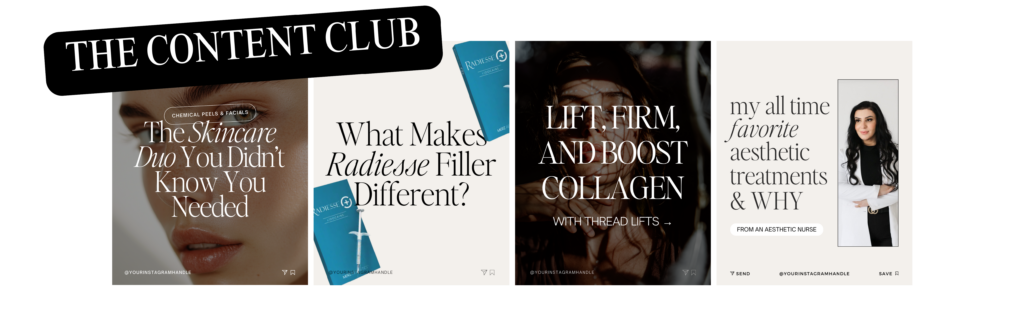
If you want help creating educational content that fits either approach, you can use these free ready-to-post templates
These templates are designed to support trust-building education without starting from scratch.
Where Done-For-You Content Fits Best
Done-for-you content can support both strategies when it’s designed with intention.
For med spas, it ensures:
- consistent messaging
- professional tone
- cohesive education
For personal brands, it provides:
- structure without sounding robotic
- guidance without oversharing
- clarity without burnout
If you want ongoing, ready-to-post content created specifically for aesthetic businesses, you can explore Aesthetic Social Club
Aesthetic Social Club helps both med spa brands and personal brands stay visible while protecting time and energy.
What Real Results Come From the Right Strategy
When your marketing aligns with what you’re building:
- content feels easier
- trust builds faster
- clients understand what you offer
- engagement becomes more intentional
Instead of forcing content to do everything, your messaging becomes clear and effective.
Final Thoughts: Clarity Always Wins
Understanding the difference between marketing a med spa vs. marketing yourself removes unnecessary pressure from content creation.
You don’t need to copy what everyone else is doing.
You don’t need to blur boundaries.
You don’t need to perform online.
What you need is a strategy that matches your business model, your goals, and your capacity.
When content is aligned, it works harder, so you don’t have to.


Comments +